

Infinite Scrolling is Literally Priming Us To Look Away In Real Life
What happens to empathy when leaving is always an option?

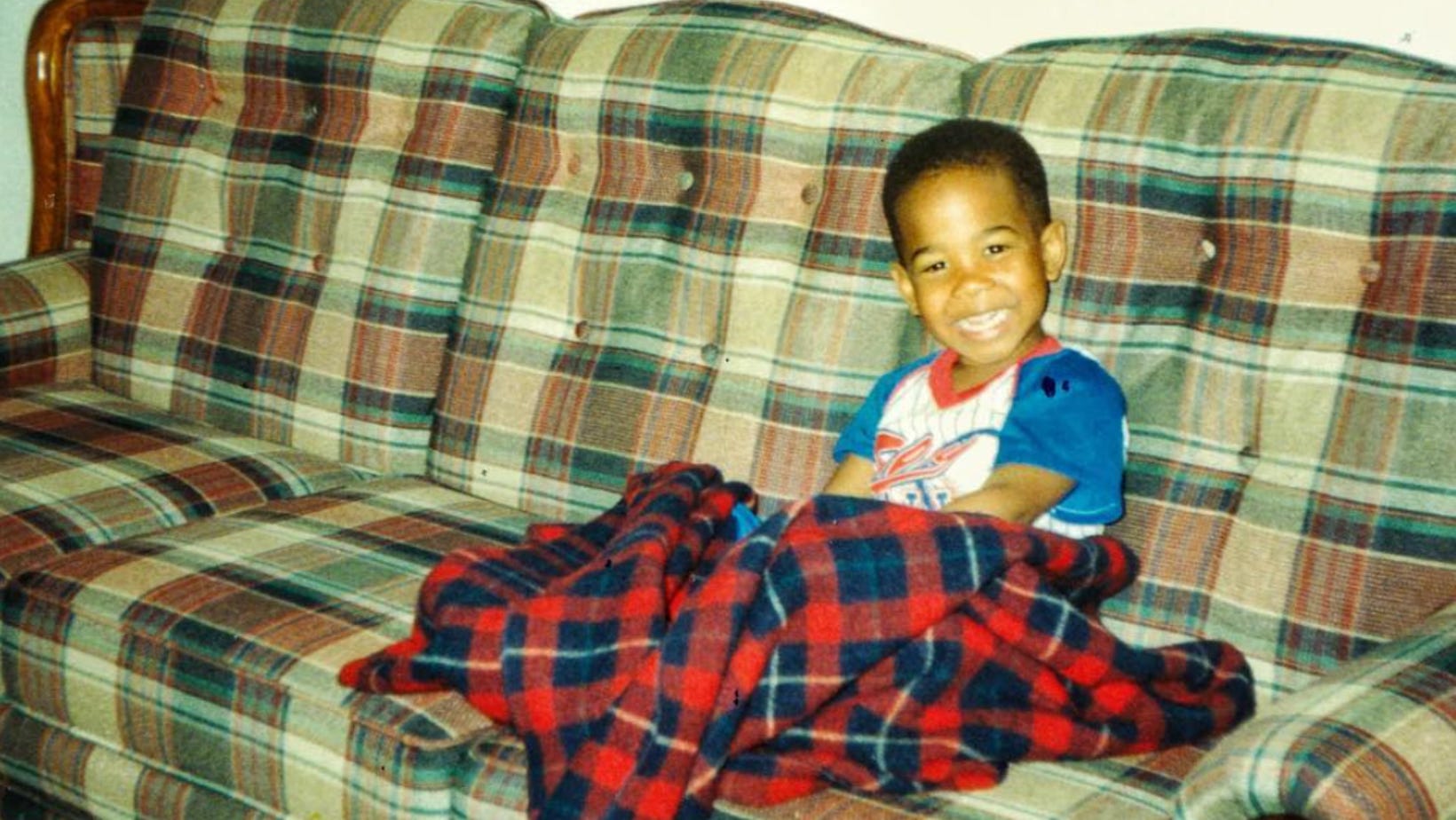
Some childhood memories are permanently etched into my brain.
I remember the concentration required to turn the vertical and horizontal dials of an Etch A Sketch; the shimmering sound of my PlayStation starting up; the texture of the red fabric on the church pews at my childhood church.
I remember the red, brown, and green plaid pattern of our family room couch; the massive wooden entertainment system that housed all of our VHS tapes; the sound of “Easy” by the Commodores blasting out of Acura RL speakers.
I also remember the structure of my parents’ lives—largely because they were irrevocably tied to the structure of my own. We went to church every single Sunday, ate dinner as a family six days a week (five if my father went to bible study), and—much to my dismay—cleaned the house as a family every Saturday morning before we could watch cartoons.
We watched the same shows every night, sequentially—the news, Wheel of Fortune, and Jeopardy. There was no such thing as a smartphone. We had one TV and one desktop computer. We couldn’t scroll past commercials, so we watched them. We couldn’t live-tweet about shows as they unfolded, so we discussed among ourselves.
I now have at least three screens within arm’s reach at any given moment. My four-year-old daughter has her own tablet.
We weren’t more connected back then because it was virtuous or because people were inherently better; we were more connected because we couldn’t scroll past each other the way that we can scroll through thousands of pieces of “content” every day, today.
We were connected because there was no omnipresent digital world to escape into. There was no other option. If you ran into an acquaintance while you were running errands, there was no way to swipe away from the interaction.
I love the convenience of this era, but I also can’t help but feel that somewhere along the way, the ability to skip past things—commercials, awkward moments, boring conversations, difficult emotions, uncomfortable truths—became more of a reflex than a convenient and conscious decision. It became muscle memory.
We learned to scroll past everything online.
And once you learn to scroll past everything online, it becomes harder and harder not to scroll past everything in real life, too. We are being trained to avoid anything that doesn’t immediately capture our attention or serve our interests.
What happens when you can always leave?
Some of the most enduring friendships, important lessons, and memorable experiences from my childhood were the result of spaces and places that I couldn’t simply “opt out of.”
I didn’t want to get up at 6:00 am and sit in the third pew at church every Sunday, but my parents made sure that I did. And because I did, I formed lifelong bonds with multiple generations of people who I otherwise would have never known. I can go back to that same church twenty years later and know that I’m back home.
After service, I can leave my childhood church and drive about five miles down the road to my high school track, where I quite literally practiced running in circles for four years. I still remember the sharp crack of the starter’s pistol, and the calf cramps that came from running mile after mile in Virginia summer heat. I didn’t love running every day, but I loved winning—and the only way to get to the winning was through the staying. Through the Tuesday speed workouts that nobody watched. Through the laps that felt like punishment. There was no version of the podium that didn’t require me to remain on that track long after I wanted to go home.
The same was true with information. My father didn’t check the news whenever he felt like it—he read the Washington Post at a specific time, in a specific way. My mother watched ABC-7 at 7PM. That constraint meant they actually digested what they learned. They discussed it. They sat with it.
I get news updates on my phone the moment they break. I can scroll past them just as quickly.
I can always look away.
I can always leave.
Nothing is required, so everything is negotiable. Every option is at my fingertips, which means I’ve lost the capacity to do the one thing that actually builds connection and understanding: stay with something long enough to let it change me.
When you can always leave, the refusal to leave—the sustained attention required to build real relationships, to develop empathy, to sit with difficulty until it teaches you something—becomes structurally impossible. We’ve engineered away the conditions that made depth possible.
The Cost of Optimization
We live in the future that The Jetsons promised us—everything is faster, more efficient, more convenient.
I can order groceries from my phone, attend meetings without leaving my house, message someone on the other side of the world, and consume more information before lunch than my parents encountered in a month.
I can accomplish more in a single day than they could in a week.
And yet.
My parents had rituals. My father’s Saturday morning routine: coffee, the Washington Post (before it was owned by Jeff Bezos), then yard work. My mother’s Sunday afternoons after church: cooking while listening to Donnie McClurkin—filling our house with sweet and savory aromas. These weren’t optimized activities. They weren’t hacks. They were rhythms—predictable, slow, and essential to the texture of our lives.
I don’t have rituals anymore, and it’s not for a lack of trying. I have routines that I’m constantly trying to improve, optimize, make more efficient. I listen to podcasts at 1.5x speed while I cook. I answer emails while my daughter plays nearby. I’m always doing two things at once, and I’m not sure I’m fully present for either.
This pressure runs deeper than my own discipline. My parents’ rituals were possible, in part, because their world made room for them. They worked hard—harder than this country ever properly acknowledged—but when my father put the newspaper down and picked up the rake, nobody could reach him. The job stayed at the job.
My generation gets squeezed from both directions: the same screens that trained my “scroll away” reflex deliver my work emails at 9 PM, and the same economy that let wages stagnate turned the side hustle into a survival strategy. This world treats rest like a character flaw and presence like a luxury. We’re being pressured to do more at the exact moment we’re being trained to sit with less.
The question that haunts me: How much is enough? How productive do we need to be? How much information do we need to consume? How many connections do we need to maintain? I’ve been asking myself these questions for years, and I still don’t have an answer.
What I do know is that the goalpost keeps moving. Every time I think I’ve found a sustainable pace, a new app or technological advancement promises to help me do more, see more, be more. The assumption baked into everything is that more is always better, that efficiency is always the goal, that standing still is the same as falling behind.
I fear that there is no end to the quest for maximum productivity—that unless we forcefully diverge from the belief system that something better is always one scroll away, we’ll never sit still long enough to arrive anywhere, at all.
What We’re Being Trained to Look Away From
We could tally the cost of all this optimization in missed dinner conversations, shrinking attention spans, and our vanishing capacity for boredom. All of that is real. But the deeper cost is what we’re being trained to look away from.
The reflex I’ve developed—the one that lets me skip past a boring email or swipe away from an awkward text—doesn’t distinguish between inconvenience and injustice. It’s the same motion either way.
The same thumb movement that helps me avoid a tedious work thread is the one I use to scroll past images of children in Gaza. The same muscle memory that lets me close a tab when a conversation gets uncomfortable is what I deploy when I see videos of unhoused people sleeping on sidewalks three miles from my house, or headlines about police violence, or reports on climate collapse.
I tell myself I’m making choices. I tell myself I’m curating my feed, protecting my mental health, being intentional about what I consume. And maybe sometimes that’s true. But there’s a difference between choosing not to engage with something and being neurologically incapable of staying with it for longer than three seconds.
I’m not sure I chose to scroll past Gaza. I think I’ve been trained to.
I haven’t ignored the genocide in Gaza–I’ve donated. I’ve used the platforms I’ve built to raise awareness. I’ve grieved what I’ve seen, and carried it into conversations with people I love.
The care is real, and it’s ongoing. And still—given the scale of what continues to unfold there—I can’t call my efforts sufficient. I can’t even call my attention sufficient. That’s the part that unsettles me most: the reflex doesn’t spare the things I care about most deeply. Even my convictions are being metabolized by a thumb that’s been trained to keep moving.
Over thousands of hours and millions of swipes, I’ve conditioned myself to move reflexively away from anything that doesn’t immediately reward my attention. Every time I’ve scrolled past something difficult, I’ve reinforced a neural pathway that says: discomfort means “leave.” Every time I’ve swiped away from complexity, I’ve strengthened the association between “this is hard to look at” and “this is not for me.” Part of me wants to call it a moral failing, because moral failings can be repented of—but this is a learned behavior, and it has become so automatic that I don’t even register it as a choice anymore.
Suffering doesn’t reward attention.
Injustice doesn’t reward attention.
Complexity doesn’t reward attention. They require it. They demand that you stay, that you sit with discomfort, that you let the weight of what you’re seeing actually land on you. They ask you to bear witness long enough that you can’t pretend it’s not real, can’t convince yourself it’s not your problem, can’t tell yourself that someone else will handle it.
My parents could do that. They didn’t have a choice. When the evening news showed footage of war or famine or injustice, they had to sit through it. There was no algorithm offering them a more pleasant alternative. There was no “skip” button. There was no feed to refresh. They had to stay with it long enough for it to become real—long enough for empathy to develop, for moral responsibility to take root, for the question “what should I do about this?” to even have space to form.
Church trained that same capacity in me, though I didn’t recognize it at the time. When somebody in our congregation lost a spouse, or a job, or a child, their grief was spoken from the pulpit and held in the room. We sat with suffering because suffering sat in the pew beside us. There was no swiping away from a funeral. There was no algorithm to serve me something lighter when the crying started. I learned what it meant to bear witness inside a sanctuary full of people who refused to look away—and I’m only now realizing how rare that training has become.
Empathy demands the refusal to look away. It’s a muscle—and I learned how muscles are built on that high school track. Through resistance. Through repetition. Through staying long after the staying stopped feeling good. Empathy is built through the specific, uncomfortable labor of sitting with someone else’s pain long enough that your brain can’t dismiss it, can’t minimize it, can’t swipe it away as someone else’s problem. It requires the kind of sustained attention that friction used to force on us—the kind we can now engineer out of our lives. Nobody has ever built strength by avoiding the weight.
We’ve built an entire infrastructure designed to let us avoid ever having to lift it—except “we” is doing generous work in that sentence. This infrastructure was built for us, on purpose, by people who profit from our distraction. The infinite scroll is a design choice. The feed is bottomless because every additional second we spend scrolling is revenue, and our attention has become the raw material of the most profitable business model in human history.
The billionaire class employs some of the most brilliant minds of our generation to guarantee that looking away from each other—and toward our screens—remains the path of least resistance. Even my father’s newspaper belongs to a billionaire now. The rituals were disrupted, acquired, and distorted.
And then we act surprised when we can’t figure out how to look back.
The Witness in my Living Room
Paradoxically, I have everything my parents wanted for me—flexibility, opportunity, access to the entire world from my living room—and I’m not sure I’m any happier for it. I’m certainly not more present.
My daughter has her own tablet. I gave it to her because I wanted her to have educational content, because I wanted moments of peace to finish work emails, because every other parent I know has done the same thing. She learned how to swipe before she learned how to tie her shoes.
Sometimes I watch her scroll through videos with her tiny thumbs, and I wonder what she’s learning to skip past. What conversations will feel too slow? What moments will seem too boring? What relationships will require more patience than she’s been trained to give? For a long time, I told myself I was managing her screen time.
Now I understand that managing her screen time was never the whole assignment. That screen has taught her letters and numbers and songs. It has bought our family the pockets of peace that this economy refuses to give parents any other way. I can’t pretend the device has given her nothing, and I won’t pretend this is the only pattern she’s absorbing.
But alongside everything else, I’ve been encoding a reflex in her nervous system: discomfort equals skip. Difficulty equals swipe. Suffering equals scroll. It’s one thread in the fabric of who she’s becoming—but it’s the thread that keeps me up at night, because it pulls against her capacity for empathy before she even knows what empathy requires.
For about five months, the sentence that you just read was where this essay ended.
I don’t know how to fix this at the scale it needs to be fixed. I can’t redesign the feed. I can’t legislate friction back into American life. I can’t hand my daughter the world I grew up in—and if I’m honest, I wouldn’t want to, because that world had its own well-practiced ways of looking away.
But she didn’t learn to swipe from an algorithm. She learned it from me. She watched my thumb move a thousand times before her hands were big enough to hold a tablet. She learned that screens are where our eyes go and that skipping is what hands do, the same way she learned every word she knows—by watching the two people she trusts most in the world.
Which means she can learn to stay the same way.
She won’t learn it from a lecture about screen time, or from parental controls, or from whatever settings I toggle inside her tablet. She’ll learn it from catching me, again and again, choosing to remain. From watching her father sit with a hard conversation instead of reaching for his phone. From being bored next to me—genuinely, gloriously bored—and discovering that boredom breaks open into something else if you give it enough time. From hearing me say “let’s stay a little longer” in the moments when leaving would be easier.
I can’t untrain my own reflex completely. Thousands of hours built it, and I won’t dismantle it in a season. But I can let her see me fighting it. I can lose the fight in front of her on Tuesday and take it up again on Wednesday. Children inherit our practices long before they understand our conclusions. If the reflex was trained one swipe at a time, then the staying can be trained the same way.
One refusal at a time. In front of her.
Questions I’m sitting with
I don’t have answers, but I do have questions—the kind that don’t reward attention, but require it. I’ve been asking them of myself, and I’d like to invite you to sit with them, too. Slowly. Without swiping to the next thing.
What was your church pew—the place you couldn’t leave—and what did it give you that you still carry to this day?
When was the last time you stayed with something past the point of comfort? What was waiting on the other side of the discomfort?
What is your thumb protecting you from right now?
What suffering have you scrolled past this week—and what would it cost you to go back and look at it long enough to let it matter?
Who is watching you look away? And who might be watching you stay?
I think about that church pew, and the plaid couch, and my father reading the same newspaper every morning. I think about how much of what I remember and value came from being stuck somewhere long enough for it to matter. Those places shaped me because I stayed—not because I wanted to, but because I had to.
Nobody is going to make my daughter stay anywhere. The world she’s inheriting will offer her an exit from every uncomfortable moment she ever encounters—and it will profit from every exit she takes. The only thing standing between her and a lifetime of looking away is what she watches me do.
So this weekend, when the moment gets slow and my hand starts drifting toward my pocket, I’m going to leave the phone where it is. I’m going to stay.
And I’m going to make sure she sees it.
I am deeply thankful for your support. If my words have helped you in some way, please consider sharing them with others. If you have the means to do so, you could also support my work directly by buying me a coffee.
What moves me most is that you refuse to call it a moral failing and name it as learned behaviour instead. That is exactly what I see in my work, only turned inward. Women who have trained themselves to scroll past their own exhaustion, their own grief, because staying asks too much. That was also learned one motion at a time. Which means it can be unlearned the same way. Your question about who is watching while you look away, or stay, is coming with me into Sunday.
This should be mandatory reading for all adults, starting with parents and college students.